

The Collaborative Conservation Efforts Behind Seaside’s Heermann’s Gulls
Updated: Jul 15
A Partnership Rooted in Conservation
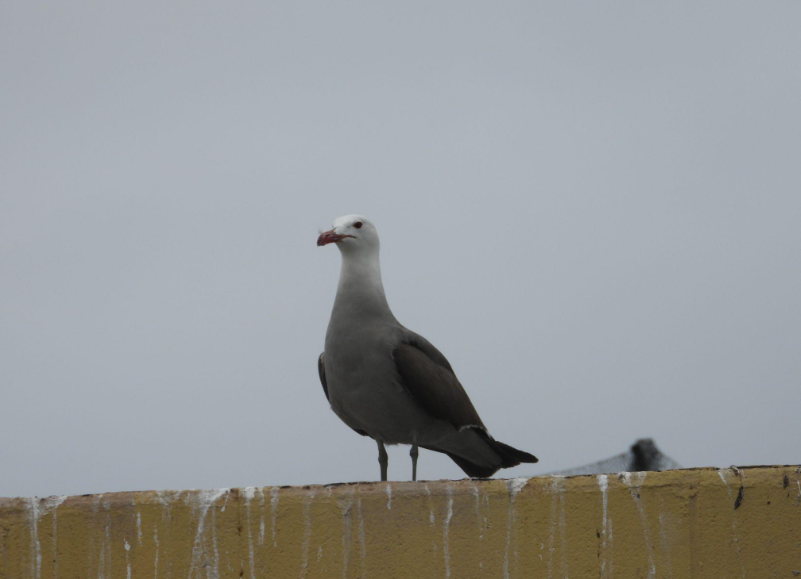
Aidan Randall and Maxwell Frantz, two CSU Monterey Bay students united by a shared passion for wildlife conservation, have formed an unexpectedly strong research partnership in the City of Seaside. Earlier this year, they joined the Monterey Audubon Society's Seaside Heermann’s Gull Monitoring Project, which monitors the only known U.S. breeding colony of a Near Threatened species. Since 1999, Heermann’s Gulls have nested at several rooftop sites across the peninsula area, with the current colony now established on Broadway in Seaside, where Aidan and Maxwell meet every Monday to gather data. Their work blends rooftop observations, GoPro footage, and drone surveys to track nest locations, chick development, and interactions with neighboring California Gull colonies, while also evaluating whether drone flights disturb the birds to ensure ethical research practices. The collaborative network of community members, business owners, city officials, and the Monterey Audubon Society makes their conservation work possible.
Left photo: Viewing site from the rooftop access. The viewing point is on the far/opposite end of the building where one of the nesting sites is located (795 Broadway in Seaside). The nesting rooftop for the Heerman’s Gull is past the roof with the netting.
Center photo: Aidan making observations/taking photos for analysis on the rooftop, opposite end of the nesting site
Right photo: Two Heermann’s Gull chicks on the rooftop nesting site
Building Knowledge Through Fieldwork and Community Partnerships
Although Aidan and Maxwell have made meaningful progress, many questions remain about the future of the Seaside Heermann’s Gull population, guiding their push toward expanded monitoring and new research opportunities. Potential next steps include:
Increasing banding efforts to track individual birds
Strengthening long‑term population surveys
Recruiting additional trained drone operators to supplement data collection
Researchers are especially interested in understanding breeding success, site fidelity, and interactions with neighboring California and Western Gull colonies, all of which influence the stability of this rare population. Their work also highlights why Heermann’s Gulls are listed as Near Threatened: roughly 95% of the species breeds on Isla Rasa, meaning a single catastrophic weather or health event could devastate the global population—making Seaside’s colony an important potential buffer. For Aidan, this first independent research project has been both challenging and deeply rewarding, from problem‑solving in the field to discovering the charm of the gulls themselves—through close observation of their cat-like calls and tiny chicks.
Left photo: Maxwell readying the drone
Middle photo: Aidan and Maxwell checking the GoPro behind 795 Broadway (below the nesting area)
Right photo: Aidan with the GoPro collecting data (nests; # of chicks)
Conclusion: Conservation Through Collaboration
Collaboration ultimately shapes every aspect of building research design and community partnerships, which make the project possible. By merging biology, technology, rooftop fieldwork, and citizen‑driven conservation, Aidan and Maxwell are answering critical questions about this Heermann’s Gull colony that impact the future of the species. Their community engagement reinforces the critical role of informed stewardship in conservation. Their project demonstrates that meaningful conservation is never solitary; it thrives when passionate people come together with a common purpose. As their research continues, Aidan and Maxwell stand as ambassadors for collaborative environmental science, showing how community‑centered partnerships can safeguard one of the most unique bird populations in the United States.


Comments