

A Waterdance of Red-throated Loons
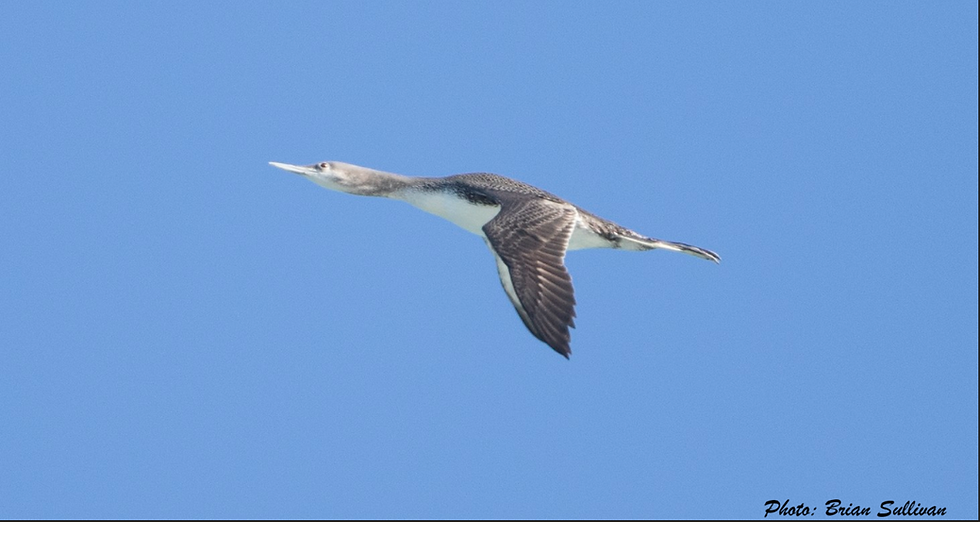
Did you know that a dedicated group of volunteered is continuing to count migrating seabirds at Point Pinos? You can still drop by for this informal Seawatch. The Red-throated Loons continue to stream past the Point. One of five species of loons, the Red-throated Loon, Gavia stellata, may undoubtedly win the title of “Most Adaptive” among this group of clumsy-footed birds. Translation of the scientific name describes a starry (stellata) Sea Mew (Gavia), a reflection of the nonbreeding appearance of the Red-throated Loon.
The Red-throated Loon's adaptability is well recognized through the diversity of aquatic ecosystems it inhabits. During the winter months, these loons can be seen in west coast waters from the Aleutians to Baha, and eastern coasts from Nova Scotia to Florida. Flexing their “Most Adaptive” title, Red-throated Loons move north in warmer weather to small, freshwater Arctic ponds to breed, nest and raise young. Small ponds provide safety for the loons and their new offspring with a quick getaway. The smallest of the loon species, the Red-throated Loon has dense bones and a long smooth body with legs set further back that allows for precise and effective hunting from both the air and water surface. Look for them at the Seawatch and notice that they have more white on their face and neck than other loons.
In breeding season, this loon displays a distinct red triangle throat patch and a plain gray head. The reddish-brown triangular patch is put on display, standing out from the gray head above and a white front neck area below. Red-throated Loons have an adaptive advantage blending with the marsh-like areas where they breed and forage for food.
Text by Tina Lanquist and Carol Greenstreet


I have started paying more attention to responsible gaming tools when comparing casino platforms. Features such as deposit limits, session reminders, time-outs, and self-exclusion options can be useful for keeping entertainment within personal boundaries. I think these tools should be easy to find rather than hidden somewhere in the account settings. Everyone approaches casino entertainment differently, casino deerfoot but having clear controls available is always a positive thing. For me, a platform feels more comfortable when it provides straightforward information about managing play responsibly.